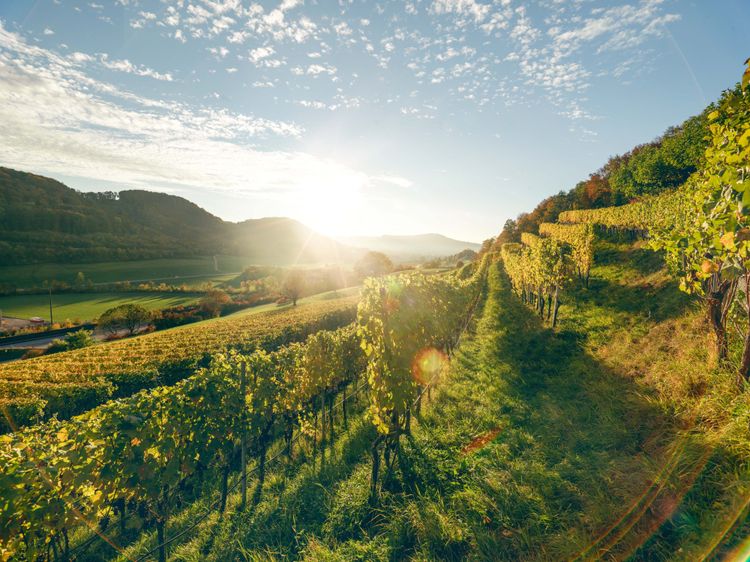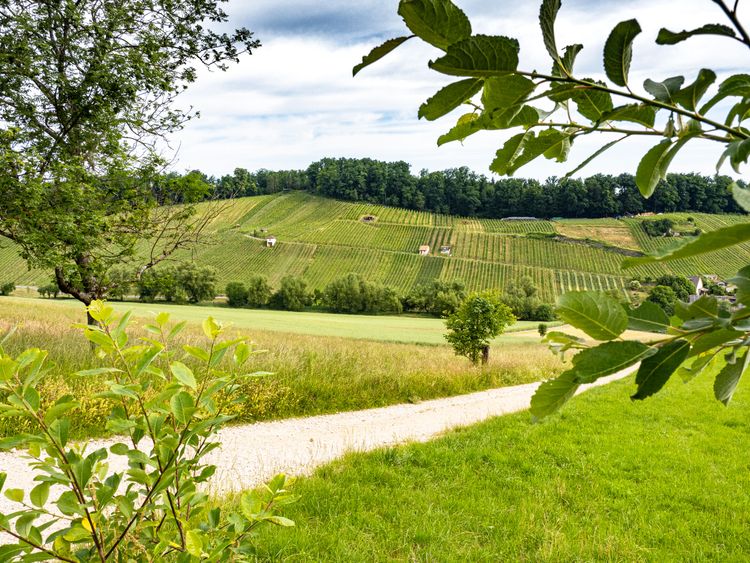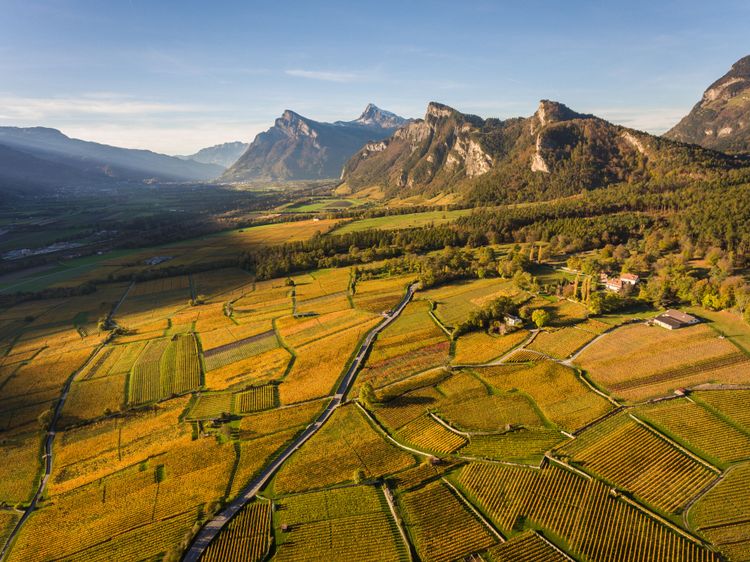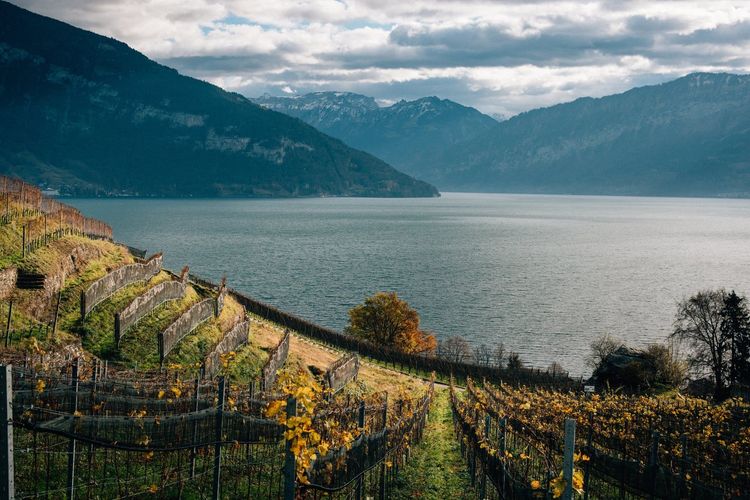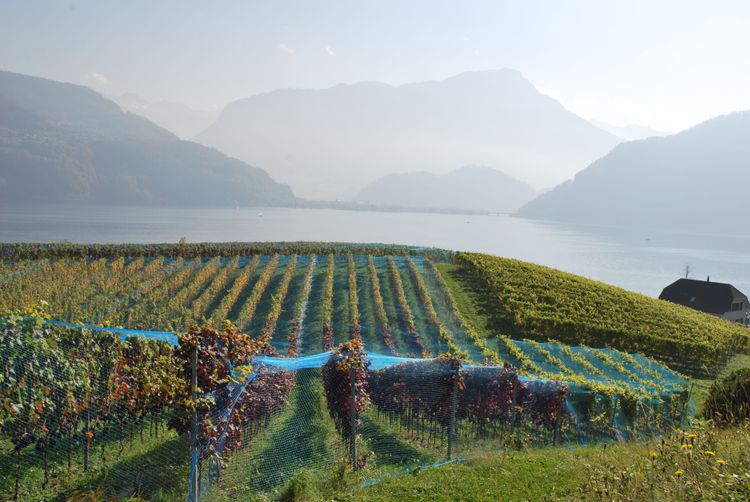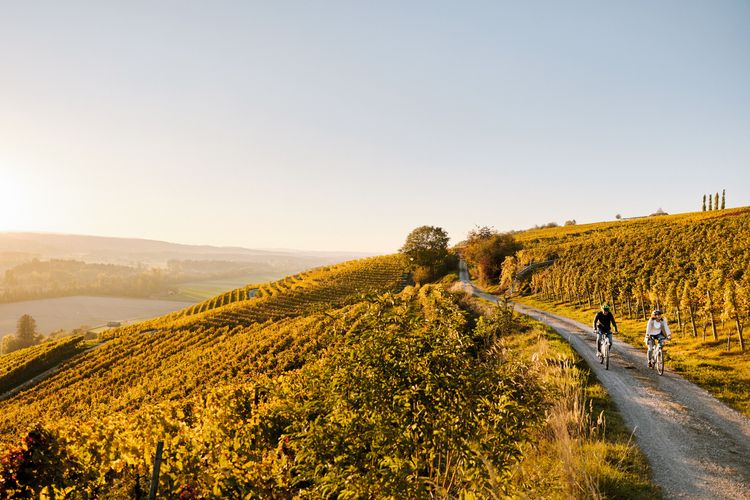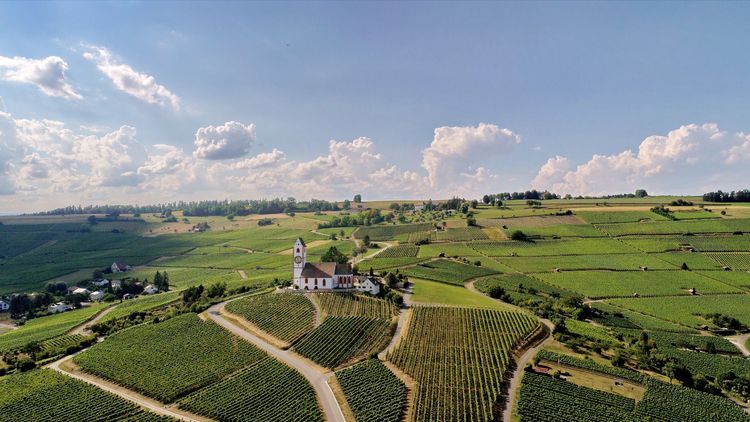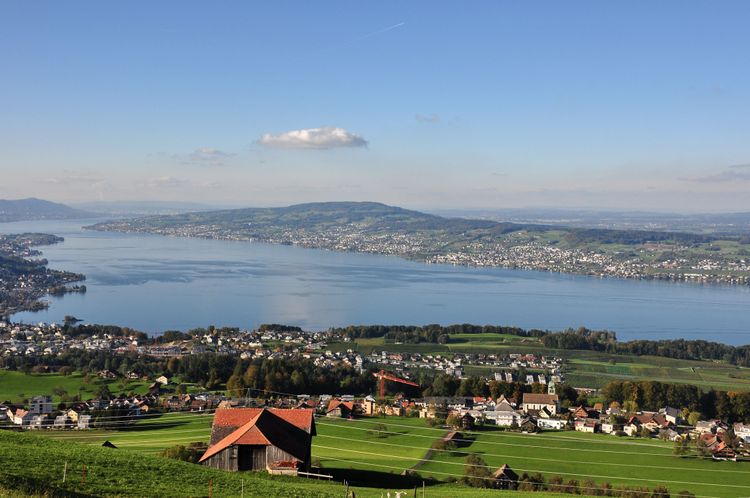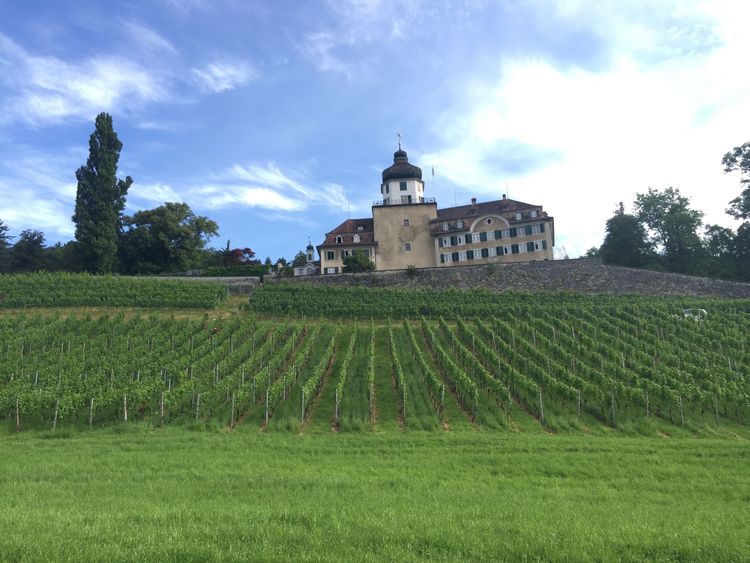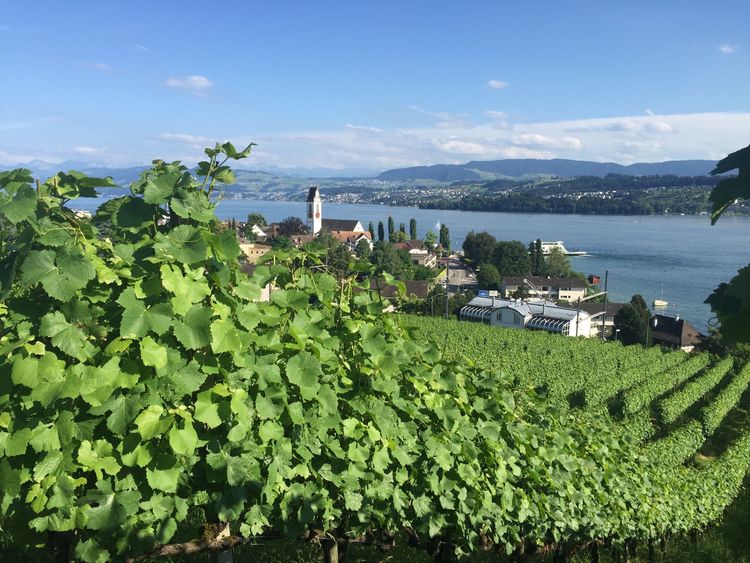
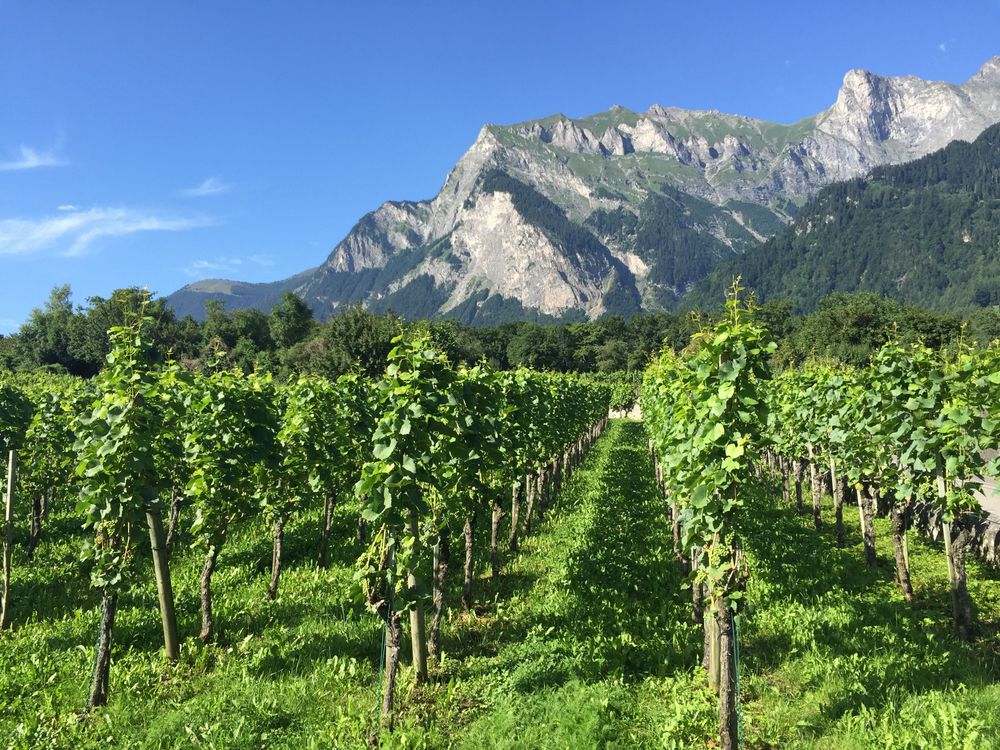
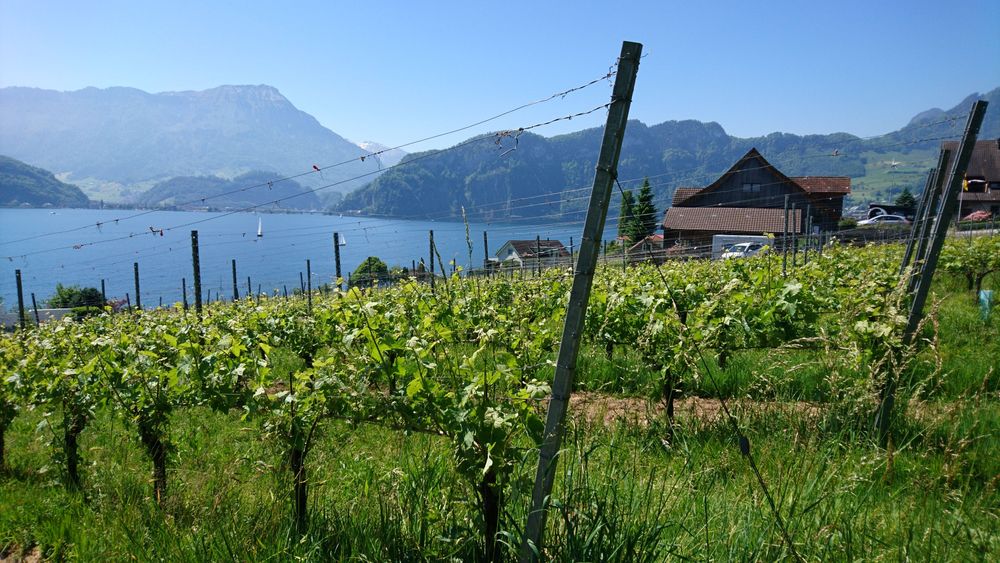
This denomination brings together the sixteen wine-growing cantons of German-speaking Switzerland. The third Swiss wine-growing region can be divided into three main entities. The western part includes the vineyards of the cantons of Basel (105 ha) and Aargau (400 ha), the central part includes Zurich (607 ha), Schaffhausen (490 ha) and Thurgau (270 ha), the eastern part includes Graubünden (410 ha) and St. Gallen (220 ha).
A common feature of the German-speaking cantons of Switzerland is that around half of their vineyards are planted with Pinot Noir vines (known here as Blauburgunder), which produce remarkably complex red wines.
The white grape varieties, in which Müller-Thurgau predominates (which in Switzerland is still called Riesling-Sylvaner), cover 25% of the wine-growing area. The specialities of German-speaking Switzerland include Räuschling, Gewürztraminer and Pinot Gris.
This region has a renewed interest in traditional grape varieties that have fallen into oblivion and a remarkable capacity for innovation.